
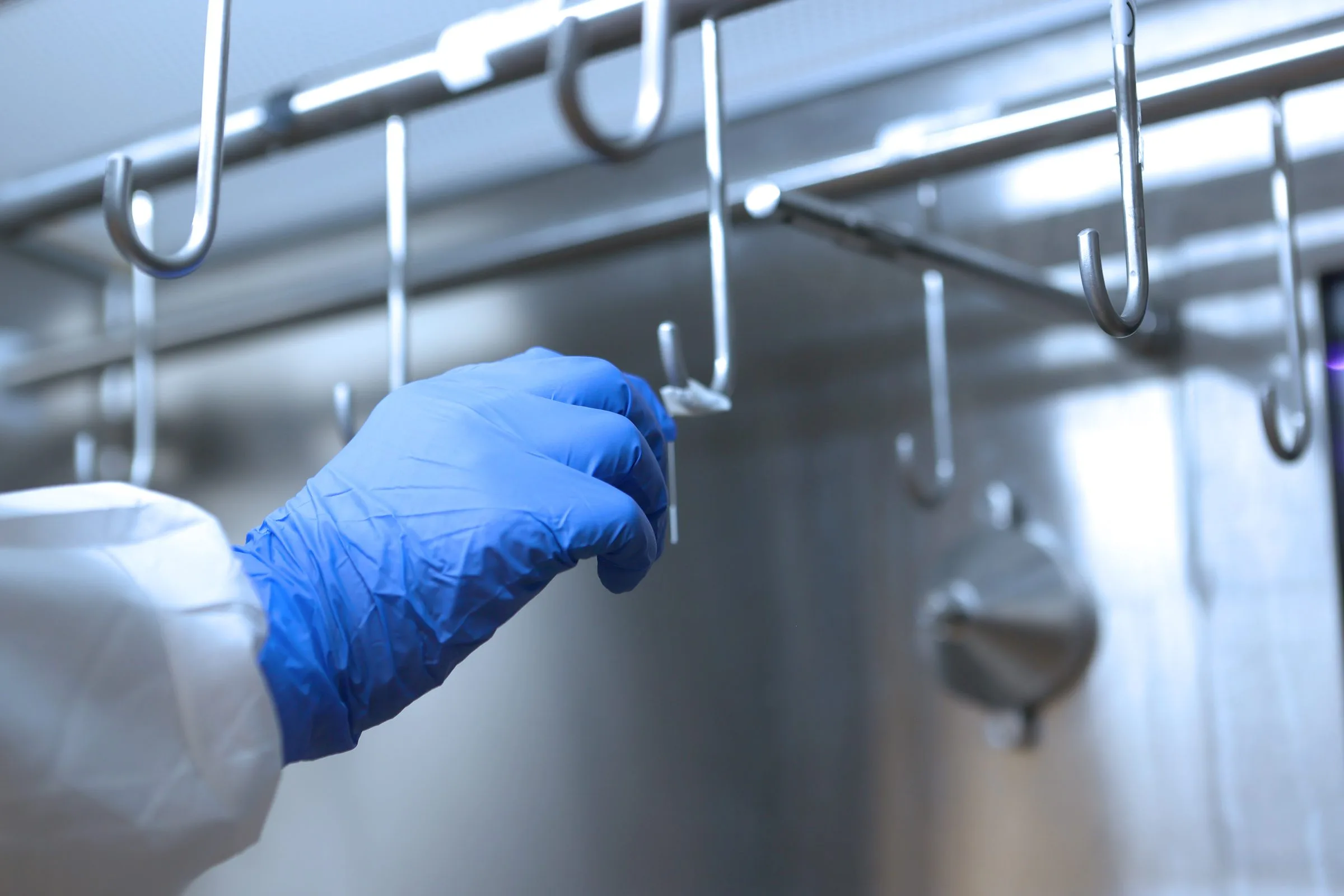
Most isolator cycles have run unchanged for years, and almost nothing in-house explains why they work. When one fails, the answer is a pass or a fail, the investigation runs longer than expected, and the data that would have explained it was never gathered.
Recorded 9 September 2026. Vanessa Vasadi Figueroa of VVF Science explains why cycles vary and what it takes to defend one. “If you can’t explain your challenge map for your VPHP cycle, it isn’t defensible.” Kate Marshall of Protak Scientific and Daniel Østerby of Moderna pick it up from there, hosted by Robin Hill-Walker.
More than fifty questions came in with registrations, and more than fifty again during the session. Three polls went to the room. Asked what would make the biggest difference to their cycle next year, 64 of 71 chose confidence in cycle consistency or better evidence for audits and inspections. Five chose shorter cycle times.
Video not loading? Watch the recording on YouTube.
Chief Executive Microbiologist and Independent Consultant, VVF Science
Over 20 years in sterility assurance, aseptic processing and contamination control. Vanessa presented the technical segment and the case study.
Technical Director, Protak Scientific
Pharmaceutical microbiologist leading Protak’s Enzyme Indicator team, with almost twenty years at GSK as a regulatory SME with the MHRA and FDA. Kate brought the on the ground view of enzyme indicator implementation, including what the first call sounds like after an unexpected result.
Global Head of Sterility Assurance, Moderna
Dan gave the manufacturer’s perspective, drawing on his general industry experience across sterility assurance.
Read about the advantages and benefits of using our Enzyme Indicators for your H₂O₂ bio-decontamination validation processes.
Biological Indicators vs Enzyme Indicators at a glance.
Presentations, white papers, webinars, shared articles, project summaries and product analysis.

Luminox House,
48 Holmethorpe Avenue
Redhill, Surrey
RH1 2NL
United Kingdom
Tel: +44 (0) 1737 924 900
Fax: +44 (0) 1737 924 901